
If you or a loved one is living with diabetes, you have probably heard the phrase “take care of your feet” more times than you can count. But what does that actually mean — and why does it matter so much?
The truth is, diabetic foot care is one of the most overlooked yet most critical parts of managing diabetes. Complications that begin as something small — a blister, a callus, a nail that is slightly too long — can escalate quickly when circulation and nerve sensation are compromised. Understanding the risks and taking a proactive approach can make the difference between a minor issue and a serious medical event.
How Diabetes Affects Your Feet
Diabetes affects the body in two major ways that directly impact foot health.
Peripheral Neuropathy is nerve damage that causes reduced sensation in the feet and legs. This means you may not feel a cut, blister, or wound forming — and by the time it becomes visible or painful, an infection may already be underway.
Poor Circulation (Peripheral Vascular Disease) slows the body’s ability to heal. Even a minor wound takes much longer to close, increasing the risk of infection, ulceration, and in severe cases, amputation.
According to the American Diabetes Association, diabetic foot complications are one of the leading causes of non-traumatic lower limb amputations in the United States — and the vast majority of these are preventable with proper, consistent care.
What Proper Diabetic Foot Care Looks Like
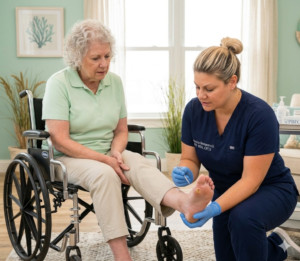
Caring for diabetic feet goes well beyond trimming toenails. A thorough diabetic foot care visit by a Registered Nurse includes:
- Skin integrity assessment — checking for cuts, sores, blisters, redness, or changes in skin texture that you may not be able to feel
- Circulation check — monitoring temperature, color, and pulse in the feet and lower legs
- Nail care — careful trimming and shaping to prevent ingrown nails, which can easily become infected in diabetic patients
- Callus and corn reduction — removing hardened skin that can create pressure points and lead to ulceration
- Wound identification — catching early-stage wounds before they develop into ulcers
- Patient education — teaching you and your caregivers what to look for between visits
Every one of these steps requires clinical knowledge and a trained eye. This is why it matters who is providing your foot care.
Why “At-Home” Matters for Diabetic Patients
For many people managing diabetes, getting to a clinic or specialist is a real challenge. Whether it is due to limited mobility, transportation difficulties, or the physical fatigue that can accompany chronic illness — leaving home for routine care is not always simple.
Mobile nursing foot care removes that barrier entirely. Your Registered Nurse comes to you, fully equipped, in the comfort of your own home. You receive the same level of professional, medically-based care you would expect in a clinical setting — without the stress of travel or waiting rooms.
For elderly diabetic patients in particular, this convenience is not just a comfort — it is a safety consideration.
Signs You Should Not Ignore
If you are diabetic, contact a healthcare professional promptly if you notice any of the following:
- A cut, blister, or sore that is not healing within a few days
- Redness, swelling, or warmth in any part of the foot
- Changes in skin color or temperature
- Numbness, tingling, or burning sensations
- Any new or unusual odor from the foot area
- Thickened, discolored, or ingrown toenails
Do not wait to see if it improves on its own. With diabetes, early intervention is everything.
How Often Should You Have a Professional Foot Assessment?
For most diabetic patients, a professional foot care visit every 6 to 8 weeks is recommended — though your individual needs may vary depending on the severity of your condition and any existing complications. Your nurse can help you establish the right schedule based on your health history.
Between visits, daily self-inspection of your feet is one of the most powerful habits you can build. Use a mirror if needed, and always check between the toes.
You Deserve Proactive Care
Living with diabetes is demanding enough. Your foot health should not be a source of anxiety — it should be managed consistently, professionally, and with compassion.
At Palm Beach Foot Care, every visit is performed by a Registered Nurse with over 20 years of experience in chronic disease management, including extensive work with diabetic patients in nursing home and rehabilitation settings. We come to your home, we take our time, and we treat your feet with the care they deserve.
Ready to schedule your first diabetic foot care visit? Call us at 561-300-1111 or book online at palmbeachfootcarern.com