Your feet carry you through life — but how often do you actually pay attention to them?
For most people, foot health is an afterthought. Minor discomforts get dismissed as “normal,” changes in skin or nail appearance are overlooked, and small problems are left to resolve on their own. Sometimes they do. But often, the feet are quietly signaling something that deserves attention — and the longer those signals are ignored, the more difficult the situation becomes to address.
Whether you are a senior, managing a chronic condition, or simply someone who wants to stay ahead of their health, knowing these seven warning signs can help you protect your feet and your overall wellbeing.
1. Persistent Cold Feet (Even in Warm Weather)
Feet that feel consistently cold — especially when the rest of your body is comfortable — can indicate poor circulation. This is particularly common in individuals with diabetes, peripheral artery disease, or other vascular conditions.
Cold feet are worth monitoring because reduced blood flow slows the body’s natural healing process. A wound or irritation that would normally resolve quickly can linger and worsen when circulation is compromised.
What to do: Mention this to your doctor and schedule a professional foot assessment. A nurse can check for circulation changes during a home visit.
2. Numbness or Tingling Sensations
A pins-and-needles feeling that comes and goes after sitting in an awkward position is usually harmless. But numbness or tingling that is persistent — or that you notice regularly in your feet or toes — is a different matter.
This can be an early sign of peripheral neuropathy, which is nerve damage commonly associated with diabetes. It can also be related to vitamin deficiencies, spinal issues, or other systemic conditions. What makes neuropathy particularly dangerous is that it reduces your ability to feel pain — which means injuries and wounds may go unnoticed.
What to do: Do not dismiss recurring numbness. Bring it to your healthcare provider’s attention and have your feet professionally assessed on a regular basis.
3. Slow-Healing Wounds or Sores
Everyone gets the occasional cut or blister. Normally, these heal within a few days. But if you notice a wound on your foot that is taking unusually long to close — or one that seems to be getting worse rather than better — that is a red flag.
Slow healing is often tied to reduced circulation, compromised immune function, or diabetes. What begins as a small sore can develop into a serious ulcer if left untreated, particularly in diabetic patients.
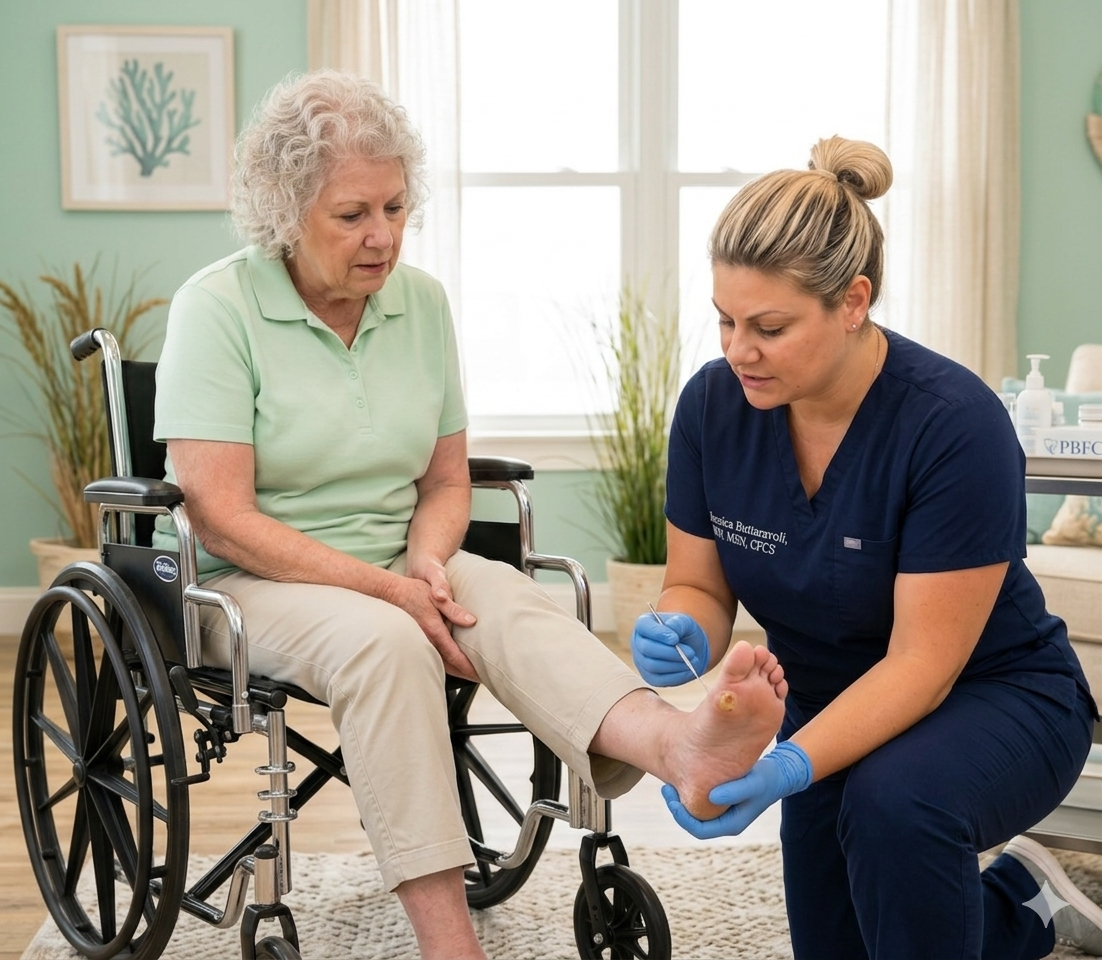
What to do: Never leave a non-healing wound unattended. Contact a healthcare professional promptly. A visiting nurse can assess the wound, provide appropriate care, and coordinate a referral if needed.
4. Changes in Nail Color, Texture, or Thickness
Healthy toenails should be relatively smooth, even in color, and easy to trim. When nails become thick, brittle, discolored (yellow, brown, or white), or develop an unusual texture, it is often a sign of a fungal infection.
Fungal nail infections are more common than many people realize — and while they may seem like a cosmetic concern, they can spread, become painful, and lead to secondary infections if left untreated. Thickened nails also become difficult to trim safely, increasing the risk of injury and ingrown nails.
What to do: Have a professional evaluate the nails and provide appropriate treatment. Avoid attempting to cut severely thickened or infected nails at home, as this increases the risk of cuts and infection.
5. Persistent Foot Odor
Some degree of foot odor is normal, particularly after physical activity. But a persistent, strong odor that does not resolve with regular washing can indicate a bacterial or fungal infection, excessive sweating, or skin breakdown between the toes.
Left unaddressed, these conditions can worsen and lead to more serious skin infections, particularly in individuals with diabetes or compromised immune systems.
What to do: A professional foot hygiene visit can address the underlying cause, provide thorough cleansing and treatment, and offer guidance on managing the condition between visits.
6. Pain, Pressure, or Discomfort When Walking
Foot pain is never something to simply “push through.” While occasional soreness after a long day on your feet is common, persistent pain — especially localized pain in specific areas of the foot — can indicate calluses causing pressure points, structural problems, bunions or joint issues, or nerve-related conditions.
For seniors, foot pain that affects walking is particularly significant because it increases the risk of falls, reduces physical activity, and contributes to a loss of independence over time.
What to do: Have the painful area assessed by a professional. Calluses and corns can often be safely reduced during a home visit, providing significant relief. Structural or joint concerns may warrant a referral to a podiatrist.
7. Dry, Cracked, or Peeling Skin — Especially Around the Heels
Dry skin on the feet is extremely common, but when it progresses to deep cracking around the heels or persistent peeling, it becomes a health concern — not just a cosmetic one. Deep heel cracks can become painful, bleed, and serve as an entry point for bacteria and infection.
This is especially true for individuals with diabetes, where even small breaks in the skin can lead to serious complications.
What to do: Professional moisturizing treatment and skin care during a nursing visit can address the immediate condition and prevent it from worsening. Your nurse can also recommend the right products and techniques for daily home care.
The Bigger Picture: What Your Feet Reveal About Your Overall Health
Many systemic health conditions — diabetes, vascular disease, autoimmune disorders, nutritional deficiencies — show early signs in the feet. This is one reason why regular professional foot assessments are so valuable. A trained Registered Nurse does not just trim nails and smooth calluses. They observe, assess, and identify — catching signs that might otherwise go unnoticed until they become serious.
Preventative care is always simpler, safer, and more affordable than reactive treatment.
Serving Palm Beach — In the Comfort of Your Home
At Palm Beach Foot Care, we specialize in exactly this kind of attentive, clinically-grounded care. Whether you are managing a chronic condition, caring for an elderly parent, or simply overdue for a professional foot assessment — we come to you.
No travel. No waiting rooms. Just compassionate, expert nursing care delivered to your door.
Ready to schedule your first diabetic foot care visit? Call us at 561-300-1111 or book online at palmbeachfootcarern.com